时间:2026年11月12日(周四)上午9:00-10:00
Time:9:00-10:00, Thursday, November 12, 2026
主持人: 西湖大学生命科学学院兼交叉科学中心助理教授,陈子博博士
Host: Dr. Zibo Chen, Assistant Professor, School of Life Sciences & Center for Interdisciplinary Studies (CIS), Westlake University
地址:西湖大学云谷校区科研中心南楼,E14-349
Venue: E14-349, Collborative Research Center-South Wing, Yungu Campus, Westlake University
讲座语言:英文
Lecture Language: English
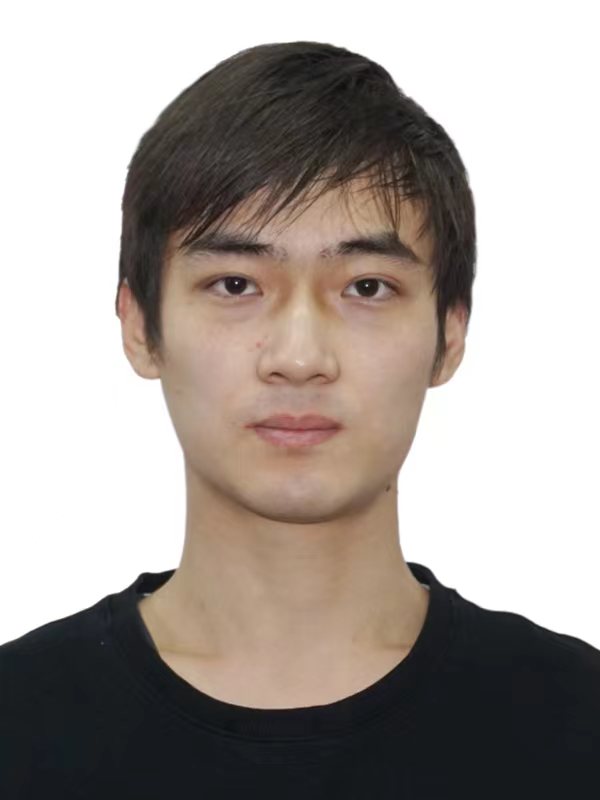
Dr. Chenyu Tang(唐晨宇)
Postdoctoral Researcher,
CNRS and Université de Lorraine
主讲人/Speaker:
Chenyu Tang is a postdoctoral researcher at the Laboratoire de Physique et Chimie Théoriques (LPCT), CNRS and Université de Lorraine, working with Dr. Christophe Chipot. He received his Ph.D. in theoretical physics from the Institute of Theoretical Physics, Chinese Academy of Sciences. His research lies at the intersection of molecular dynamics, statistical mechanics, and machine learning, with a focus on rare-event sampling, conformational dynamics, and biomolecular kinetics. His recent work includes the development of Gen-COMPAS for exploring conformational free-energy landscapes and transition pathways, as well as committor-based approaches for characterizing multistate biomolecular dynamics.
讲座摘要/Abstract:
Protein function depends on conformational changes that cannot be understood from static structures alone. While generative models such as AlphaFold or RFdiffusion can produce diverse protein structures, revealing their populations and the dynamical pathways connecting them remains challenging. Molecular dynamics provides a physical description of these processes, but rare transitions often require prohibitively long simulations.
In this talk, I will introduce Gen-COMPAS, which combines diffusion models, committor learning, and molecular dynamics to discover rare conformational transitions from limited initial sampling. Generative models propose intermediate conformations, while a learned committor guides further exploration toward transition regions. Applications to protein folding and functional conformational changes demonstrate how this iterative approach reveals pathways, intermediates, and approximate free-energy landscapes.
Rather than replacing molecular dynamics with a learned simulator, Gen-COMPAS uses machine learning to guide where physical simulations should explore. This perspective connects generative protein modeling with statistical physics, moving beyond structural diversity toward understanding the conformational processes underlying protein function.
讲座联系人/Contact:
西湖大学交叉科学中心,朱子霖,邮箱:zhuzilin@westlake.edu.cn
Center for Interdisciplinary Studies (CIS), Westlake University, Ms. Zilin Zhu, Email: zhuzilin@westlake.edu.cn