时间:2026年9月11日(周五)下午14:00-15:30
Time:14:00-15:30, Friday, September 11th, 2026
主持人: 西湖大学生命科学学院、交叉科学中心兼聘助理教授教授,陈子博博士
Host: Dr. Zibo Chen, Assistant Professor, School of Life Sciences & Center for Interdisciplinary Studies (CIS) Associates
地址:西湖大学云谷校区E14-349
Venue: E14-349, Yungu Campus, Westlake University
讲座语言:英文
Lecture Language: English
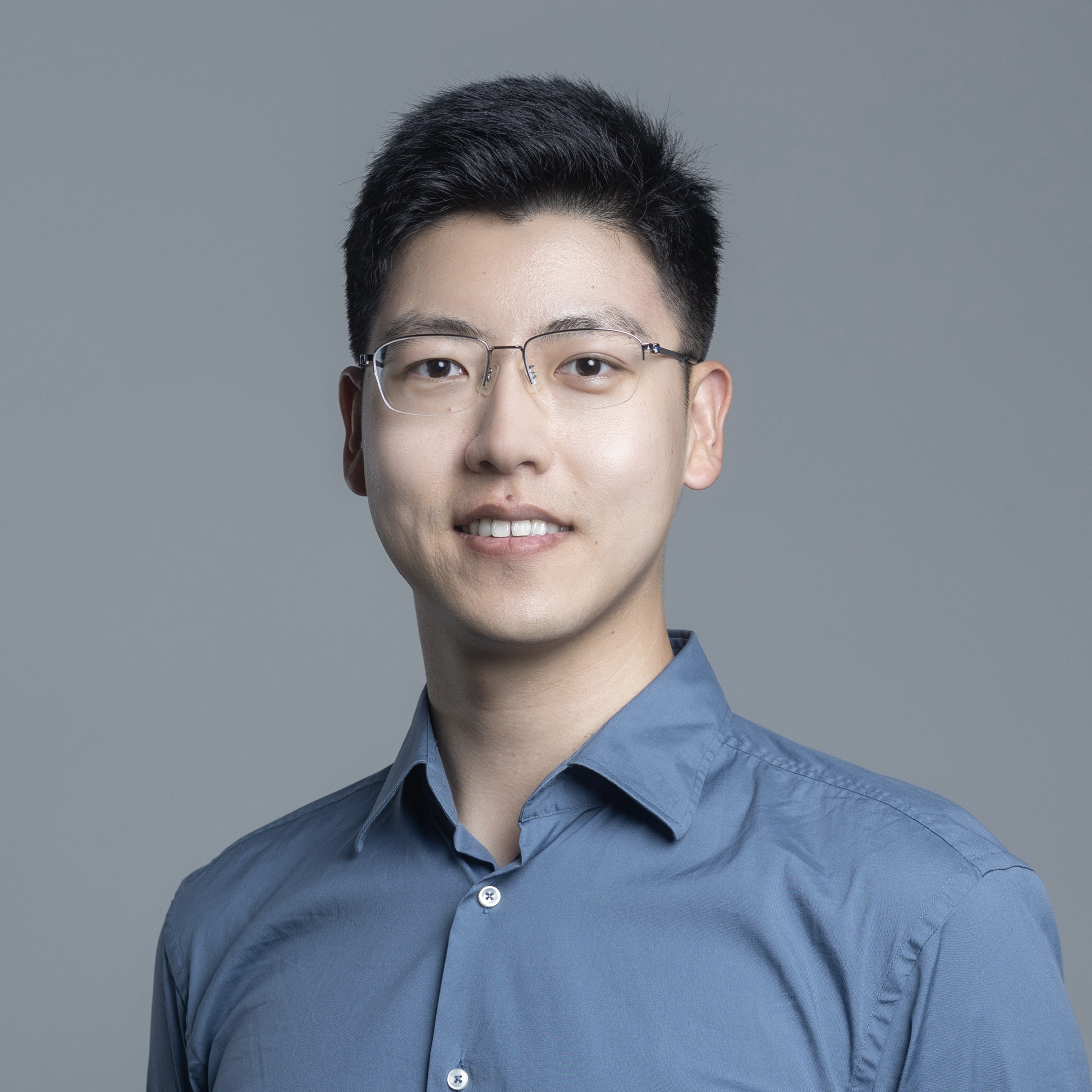
Prof.Haoyang Li(李昊阳)
Department of Artificial Intelligence, School of Engineering
Westlake University
主讲人/Speaker:
Haoyang Li is an assistant professor in the Department of Artificial Intelligence at Westlake University and an awardee of the NSFC Excellent Young Scientists Fund (Overseas). Before joining Westlake University, he was a postdoctoral researcher at Stanford University. He received his Ph.D. in Computer Science from King Abdullah University of Science and Technology (KAUST) in 2025, and his M.S. and B.S. degrees from Jilin University in 2021 and 2018, respectively. His research focuses on building AI Virtual Organs through advances in spatial biology, with the goal of moving beyond observational studies toward predicting disease progression and enabling personalized intervention. He has published more than 20 papers in leading journals and conferences, including Nature Machine Intelligence, Nature Communications, Science Advances, IEEE TMI, and MICCAI. His work has been featured as a Nature Communications Editors' Highlight and included among the journal's Top 50 papers in Biotechnology and Methods. He also serves as an editorial board member for journals including BMC Bioinformatics and Frontiers in Public Health, and as a reviewer for Nature-family journals and top AI conferences.
讲座摘要/Abstract:
Tumor behavior emerges from the molecular states of cells and their spatial organization. Spatial omics makes this measurable, yet each experiment yields a thin section of three-dimensional tissue; spatial profiling reaches few specimens while H&E histology exists for nearly all of them, and each modality captures only one facet of the same biology. This talk will present three works following that progression. SANTO aligns and stitches spatial omics slices in a coarse-to-fine manner, scaling to large image-based datasets and supporting 3D-to-3D and cross-modality alignment. PAST, a pan-cancer foundation model trained on 20 million paired histopathology images and single-cell transcriptomes, transfers molecular information onto routine pathology slides for expression prediction, virtual molecular staining, and survival analysis. SCOPE integrates histology, spatial transcriptomics, and spatial proteomics into a task-agnostic cell-state representation that resolves fine-grained spatial domains and refines risk stratification. Together, these works move from where cells are, to what they are when only histology is available, to a unified representation of cell state.
讲座联系人/Contact:
西湖大学交叉科学中心,朱子霖,邮箱:zhuzilin@westlake.edu.cn
Center for Interdisciplinary Studies (CIS), Westlake University, Ms. Zilin Zhu, Email: zhuzilin@westlake.edu.cn